EN
EN

EN
- Home
- About Us
-
Products
Products
- Capabilities
- Projects
- News
- Contact Us
2026/05/08
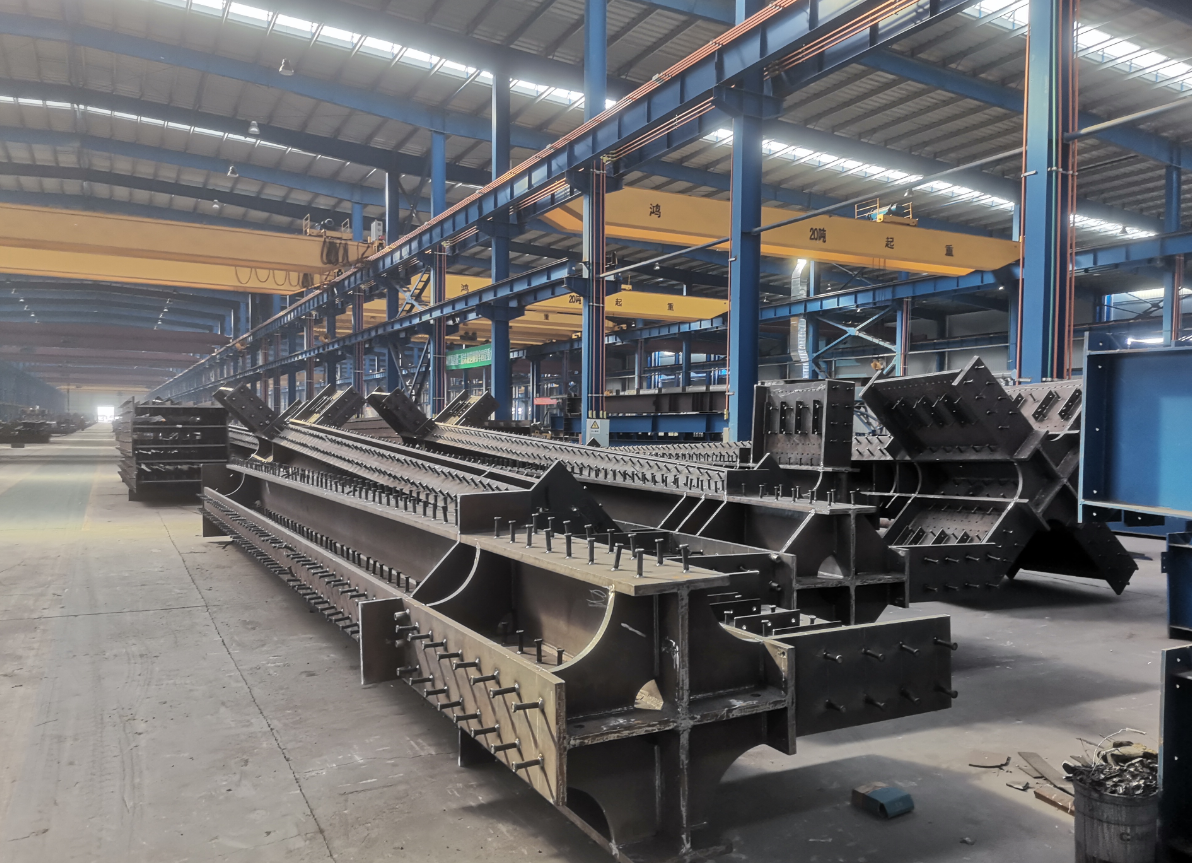
How heavy steel structure enables taller, slimmer high-rise profiles through superior load-bearing capacity
The design of heavy steel structure pushes the boundaries of high-rise buildings in terms of height-to-width ratio. Because its strength-to-weight ratio is 30% higher than reinforced concrete, heavy steel unable to do heights with the same cross-sectional area to bearing load. The result is a preserved structural profile, with a slimmer profile and maximized space. Steel towers typically achieve a height-to-width ratio of 10:1 and concrete towers achieve a height-to-width ratio of 7:1. In addition, steel is more uniform than concrete, which helps to improve load variance. In 2023, the Council on Tall Buildings and Urban Habitat (CTBUH) reported global construction data indicating that structures taller than 50 steel stories gain 15% more rentable space, making it a preferred material for high-in urban space.
Strengthening Resistance to Lateral Loads: Integrating Moment-Resisting Frames and Braced Cores
Heavy steel structures utilize integrated systems that achieve a balance of rigidity and ductility to counter lateral loads. Moment-resisting frames utilize connections between beams and columns to counter and absorb wind and seismic energy. Braced cores use diagonal braces of steel dispersed throughout a core to transfer lateral loads to the foundation, thereby reducing lateral sway up to 50%. Moment-resisting frames and braced cores work together to provide ductility to frames during minor seismic events and to counter high magnitude loads. The AISC 341 code ensures that ductility detailing dictates the energy dissipation of a frame core. A combination of braced cores and moment-resisting frames can withstand wind loads of more than 150 mph and seismic events of a 2,500-year return period, thereby keeping occupants and structures safe in extreme environments.
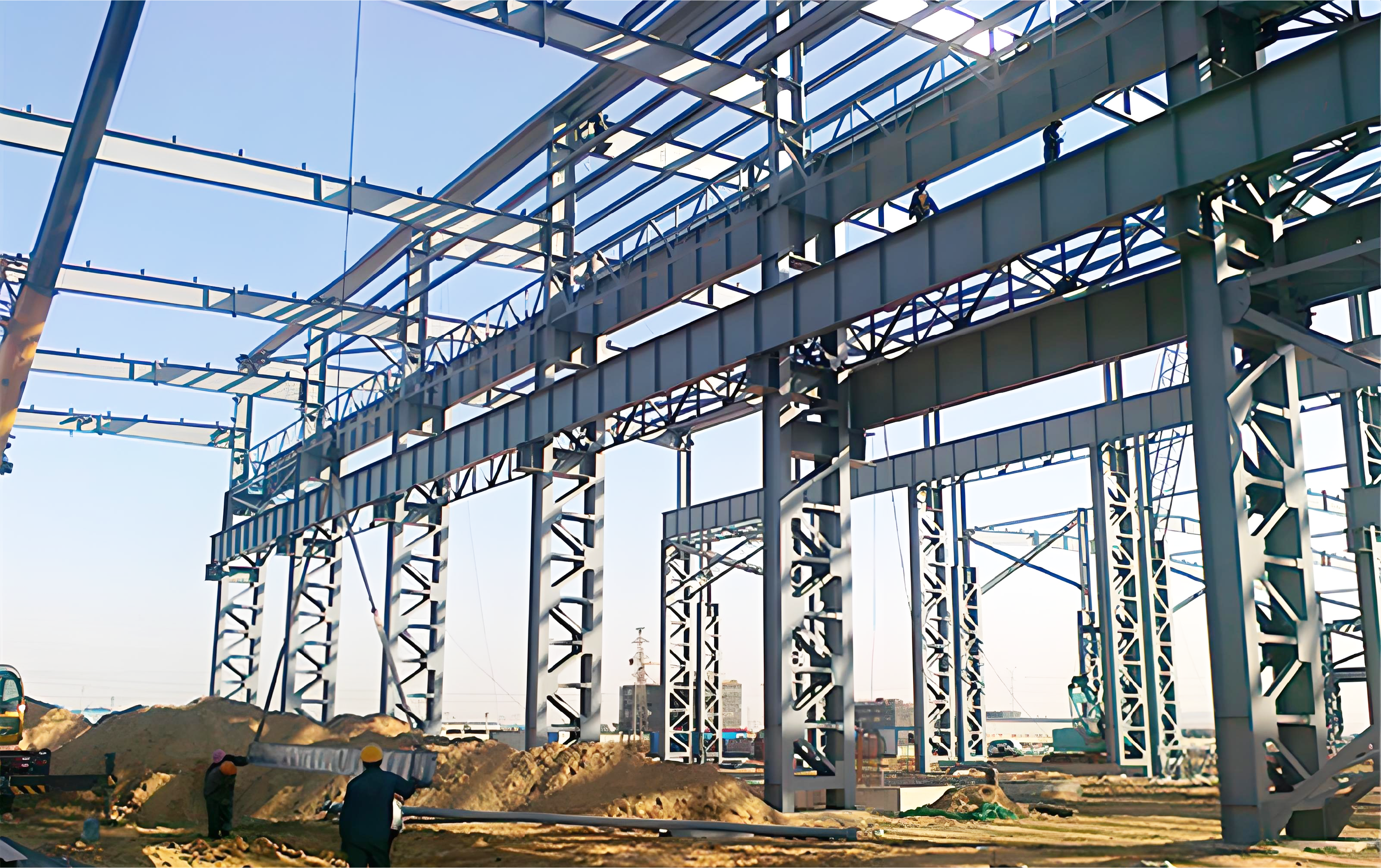
Ductility and Special Seismic Design of Heavy Steel Systems
Ductility and Special Seismic Design: Why heavy steel structures can provide uniform energy dissipation
Heavy steel structures, designed in accordance with the AISC 341 code, utilize ductility and special seismic design principles to dissipate seismic energy, resulting in a localized controlled yield and not a brittle collapse. Studies have shown that seismic fuses can be engineered to dissipate up to 80% of the seismic energy at an earthquake's intended strongest point. The flexible nature of steel creates a significant impact on a structure by allowing significant, and even necessary, deformations to occur, even in cases that may be prone to major inter-story drifts exceeding 2.5%. The AISC 341 code includes significant structural design and detailing practice direction to induce controlled yielding in order to predictably dissipate seismic energy and to create design assurance that a structure can be performed consistent and in a repeatable manner throughout its intended lifespan.
Taipei 101 case study: Synergy between heavy steel structure exoskeleton and tuned mass damper
Taipei 101 demonstrates brilliant engineering with the combination of both a heavy steel structure and dynamic control systems. The 730-tonne tuned mass damper collaborates with a perimeter heavy steel exoskeleton connected to the eight megacolumns. During Typhoon Soudelor, this combination reduced peak acceleration by 40%, preventing 700 mm of lateral sway from causing discomfort to the occupants. The exoskeleton offers the system stiffness to anchor and drive the damper, and also re-patterns the structure's framed components and absorbs the system's vibrational harmonics. This system is validated to a 2,500-year seismic return period. This was substantiated during the 2022 Taiwan earthquake, and dampers were able to nullify 700 kN of seismic force acting on the heavy steel structure.
Fatigue life and serviceability at 50+ stories: Heavy steel structure outperforms concrete and composite systems
Heavy steel structure has better fatigue life and serviceability at 50+ stories. Steel has a homogeneous molecular structure that distributes stress evenly, resulting in greater fatigue life and smaller crack propagation when compared to reinforced concrete, with the difference being about 40% according to the 2023 O. C. studies on structural viability. Compared to relaxation and time-dependent creep deformations of concrete, heavy steel structure has 0.1% relaxation deformations, with an absence of time-dependent deformation over 50-year lifetimes. The alteration of the system and the harsh and costly retrofitting that results from composite systems is absorbed by the composite systems that relax deformations at a 25% greater rate.
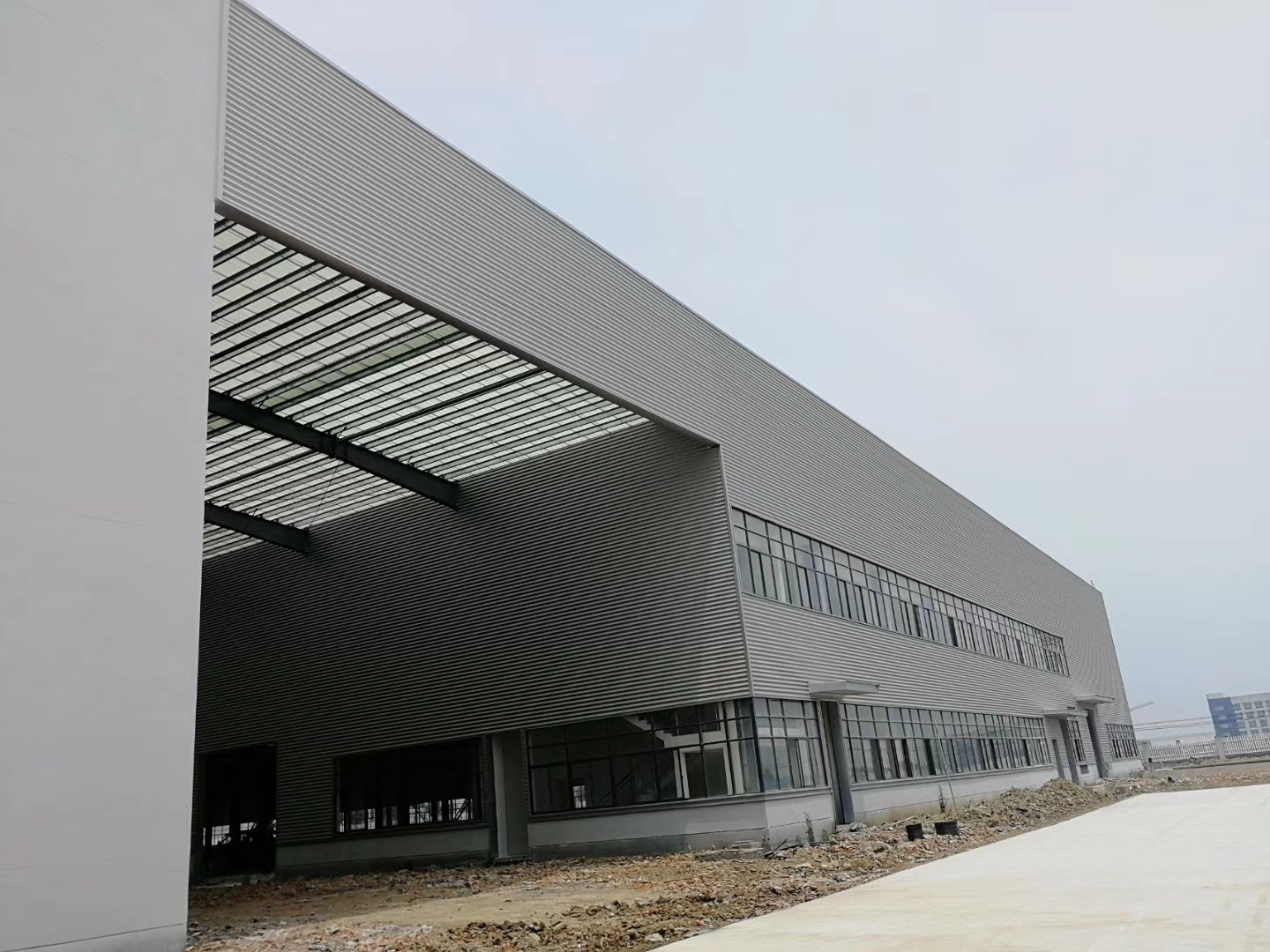
Using Intumescent Coatings and Encasing for Fire Resistance Strategies for Heavy Steel Structures Across 2-4 Hour Ratings
Modern heavy steel structure effectively combines design-engineered parameters achieving fire resistance and meeting the fire rated envelope of ASTM E119. Intumescent Coatings are able to expand up to 50 times their original thickness charring at 200 degrees Celsius. Encasing the core of steel elements with concrete provides a larger mass thermal barrier and contributes to physical protection. Though unprotected structural steel loses its strength when exposed to fire, its ductility means it can provide the structural support much longer than other materials that are able to provide sudden and immediate failures. This is evident in NFPA 2022 full scale tests where safe egress and the ability to support fire ground operations is achievable.
1. Fire rated concrete structural cores.
2. In large steel structures, what is the real technological advantages
of vertical loads and materials that have superior load bearing capacity?
Heavy steel construction allows for taller and thinner skyscrapers as they have superior strength to weight ratios and load-bearing capacity allowing for the optimum of usable space.
3. How can heavy steel structures be able to dissipate forces?
Heavy steel structures are able to comply with AISC 341-compliant ductile detailing, able to predictively dissipate energy that is seismic and at the same time localized so as to ensure the ductile yielding does not end in sudden and brittle failure.
4. What is the purpose of having moment-resisting frames and braced cores?
Moment-resisting frames are able to manage wind energy and seismic frames due to the controlled closing of frames, and horizontal loads are also able to control the vertical braced cores.
Q: What fire resistance strategies are employed for heavy steel structures?
A: Some strategies utilized include coatings that expand with heat, outer encasements offering fire resistance protection, and hybrid fire-resistance rating methods that meet ASTM E119 standards.
Explore our latest company news, project cases and industry insights.