EN
EN

EN
- Home
- About Us
-
Products
Products
- Capabilities
- Projects
- News
- Contact Us
2026/05/20
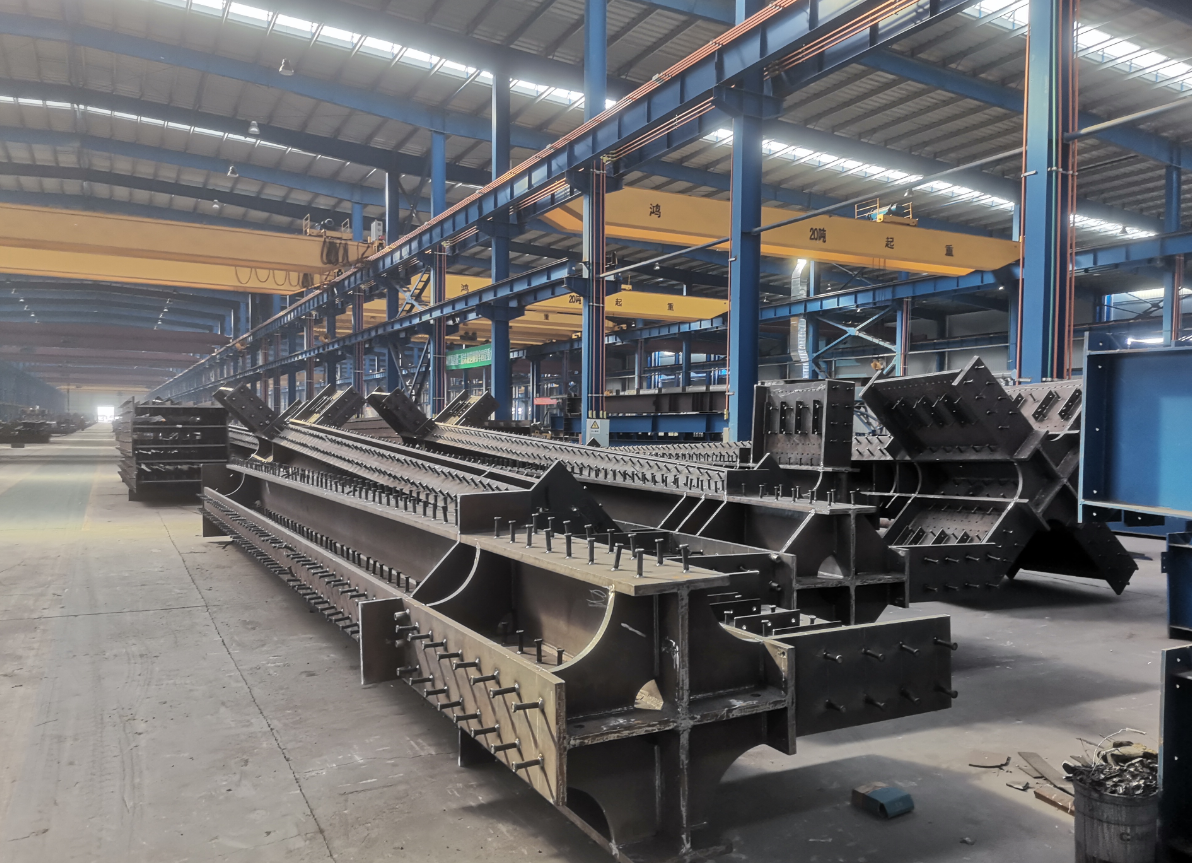
A steel truss is a structural framework composed of interconnected triangular units designed to efficiently distribute loads across long spans. Its core components include top and bottom chords—the primary horizontal members—connected by diagonal or vertical web members. These triangulated elements transfer compressive and tensile forces through pin-jointed or rigid connections, typically reinforced with gusset plates. This geometric configuration minimizes material usage while maximizing load-bearing capacity, enabling spans exceeding 100 meters in bridge applications. Secondary elements like purlins and lateral bracing enhance stability against wind and seismic forces. The inherent redundancy of triangular units provides structural resilience: failure in one member redistributes loads to adjacent components without catastrophic collapse.
Steel truss systems vary significantly in configuration to meet specific structural demands. Each design offers distinct load-bearing properties, making them suitable for different applications based on span requirements, environmental conditions, and architectural constraints. Understanding these variations helps engineers select optimal configurations for projects ranging from bridges to commercial facilities.
Pratt trusses feature diagonal members sloping toward the center, optimized for medium-to-long spans where vertical loads dominate. Warren trusses employ equilateral triangles, distributing forces evenly through alternating tension and compression members—ideal for dynamic bridge applications. Howe trusses reverse the Pratt configuration with compression diagonals, excelling in heavy-load scenarios like railway bridges. All three rely on triangulation to minimize deflection and maximize material efficiency.
Parallel chord trusses maintain consistent depth between horizontal top and bottom chords, providing uniform load distribution for flat-ceiling commercial spaces. They accommodate utilities within the webbing while spanning 20–30 meters efficiently. Pitched trusses feature sloping top chords that shed precipitation naturally, making them ideal for industrial buildings in high-snow regions. Their peak height enhances attic storage capacity, though connection complexity increases fabrication time compared to parallel variants.
Steel trusses deliver an exceptional strength-to-weight ratio, enabling clear spans of up to 40 meters without intrusive support columns. This allows open, flexible interiors ideal for warehouses, arenas, and industrial buildings. The triangular geometry efficiently distributes loads, reducing material use while maintaining structural integrity. In contrast, concrete or timber alternatives often require thicker columns and heavier foundations—limiting design freedom and increasing costs.
Prefabricated steel trusses accelerate project timelines by 40–50% compared to traditional methods. Components are fabricated off-site with precise tolerances, then quickly assembled on location. This minimizes weather delays, labor hours, and site waste. For commercial developers, faster completion translates to earlier occupancy and lower financing costs. Wood or concrete trusses typically require more on-site cutting, curing, or manual joining—slowing progress.
Steel trusses are fully recyclable, retaining their material properties through multiple lifecycles. Using recycled steel reduces the carbon footprint of new construction significantly. A steel truss can last 50+ years with minimal maintenance, while timber is susceptible to rot and pests, and concrete production emits high CO₂. By choosing steel, builders lower embodied carbon and end-of-life waste—meeting modern sustainability goals without sacrificing performance.
Successful steel truss projects hinge on rigorous engineering protocols spanning structural analysis, material durability, and regulatory adherence. Miscalculations in any phase risk deflection, corrosion, or catastrophic failure.
Engineers must calculate dead, live, wind, and seismic loads using finite element analysis (FEA) software. Connection detailing demands precision—bolted or welded joints require stress distribution simulations to prevent fatigue fractures. Deflection thresholds (typically L/360 for roofs per AISC 303-22) necessitate cambering during fabrication to offset long-term sag.
Galvanizing or epoxy coatings aligned with ISO 14713 prolong service life in humid environments. Fire ratings mandate intumescent coatings achieving 60–120 minutes of resistance per UL 1709. Compliance with AISC 360-16 and regional codes ensures proper load factors, weld inspections, and material traceability—non-negotiable for insurance and safety audits.
What is the main purpose of a steel truss?
A steel truss is designed to efficiently distribute loads across large spans using interconnected triangular units, making it ideal for applications like bridges and industrial buildings.
What are the key types of steel trusses?
Common types include Pratt, Warren, and Howe trusses, each suitable for specific load scenarios, along with parallel chord and pitched trusses for commercial and industrial purposes.
How does a steel truss compare to concrete or timber alternatives?
Steel trusses offer a higher strength-to-weight ratio, longer spans, and better recyclability compared to concrete and timber, which are heavier and less sustainable.
What factors influence the design of a steel truss?
Key considerations include load analysis, connection detailing, corrosion protection, fire ratings, and compliance with engineering standards like AISC 360-16.
Why are prefabricated steel trusses advantageous?
Prefabricated steel trusses reduce on-site construction time by up to 50%, minimize waste, and ensure precise assembly, accelerating project timelines.
Explore our latest company news, project cases and industry insights.