EN
EN

EN
- Home
- About Us
-
Products
Products
- Capabilities
- Projects
- News
- Contact Us
2026/05/08
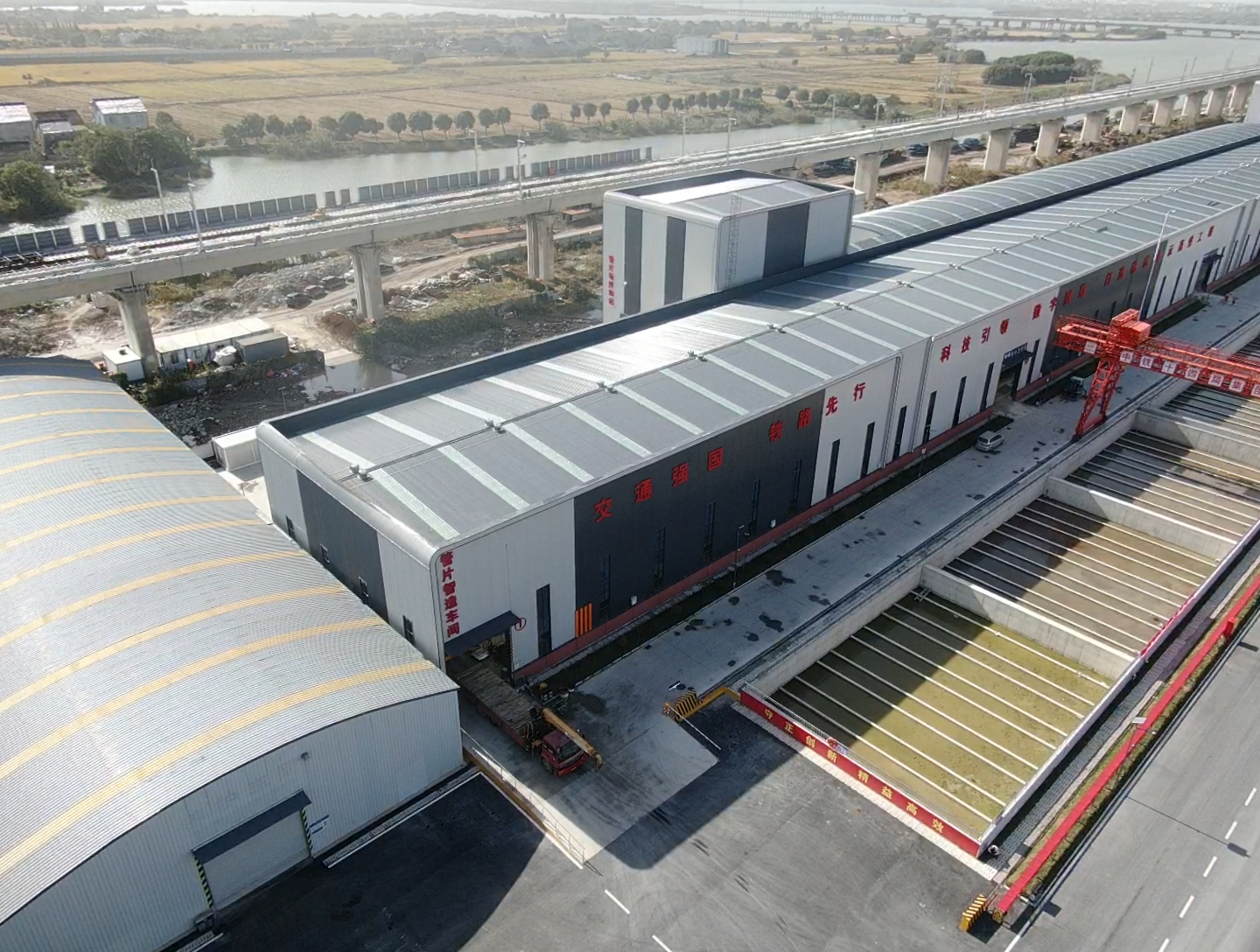
Integration of Circular Economies: Recycled Steel and Optimized Design
The Steel Structure industry has begun to focus on the circular economy to drive development. The current priority is to maximize the lifecycle and recycled content of structures. Steel is considered the most recycled material to exist, as over ninety percent of structural steel is recovered, and reused at the end of the lifecycle with no loss in performance, according to the World Steel Association. Leading practitioners are embedding disassembly from the design phase: standardized connections, modular frame work, and reversible fasteners make components separable and reusable. Fasteners are selected for their corrosion resistance and durability, not for their longevity, to avoid the loss of material for future recycling. This completely integrates the design and construction process, reducing landfill waste by seventy-five percent and lowering the total embodied carbon from the extraction, manufacturing, and demolition processes.
This description considers the specific attributes of Green Steel Production and Low-Carbon Fabrication for Sustainable Steel Structures.
Steel production is under going a radical transformation toward decarbonization. Technologies such as hydrogen based direct reduction and electrified arc furnaces (EAF) powered by renewable sources will replace coal based blast furnaces, resulting in a reduction in CO₂ emissions by between 50% and 95% depending on the source of energy and maturity of the process. Commercial scale green steel production has been demonstrated by companies such as SSAB and H2 Green Steel, and global EAF production is estimated to be 35% of total production by 2030 (International Energy Agency 2023). Alongside this shift, Fabrication facilities adopted closed loop water systems, real time energy monitoring, and precision cutting processes that reduce scrap by 12% or more. Combined with on-site carbon capture pilot projects (now operational in several EU and North American mills), they create a realistic and scalable technical solution for establishing net zero structural steel production.
Digital Transformation in Steel Structure Design and Construction
BIM-Enabled Precision Prefabrication and Seamless Steel Structure Assembly
In modern steel construction, Building Information Modeling (BIM) acts as the central nervous system. Combining all the geometry, material specs, and tolerances and sequencing of construction into one intelligent system, allows millimeter accurate off-site prefabrication. Costly field errors are a thing of the past with virtually clash free design and construction. Integrated workflows bring design synchronously to the workshop and completely automate the process of machining and planning the arrangement of the prefabricated elements. At the site, fully assembled nodes that contain the interfaces required for the connections, arrive pre-welded, thus reducing assembly time and construction delays by 40% and 30%, respectively. The integration achieved results in a reduction of material use by 20%, reinforcing the sustainability goals of the projects without compromising the structural integrity.
AI and Generative Design for High-Performance Steel Structure Optimization
Artificial Intelligence is changing the structural industry. Generative design allows designers to use site specific data to internally simulate thousands of framework configurations, evaluating options such as seismic data, wind load data and even the projected occupancy of the structure. After this process, structures typically built with a certain amount of steel can now be built with up to 15% less steel. These structures can be more resilient, while remaining lightweight and having a better strength to weight ratio. AI powered modeling predicts the stress for the structure, simulating fatigue and identifying critical failure points during the design process. This allows for strategic reinforcement without unnecessary over-engineering. Integrated design code checking modules provide automated and accelerated structure design reviews. The modules verify design compliance with AISC, Eurocode, and many other local structural design regulations. The computational design process provides verifiable performance, grounded in innovation and speculation.
Adaptability and Intelligence in Advanced Steel Structure Systems
Climate Adaptive Steel Framework Attuned to Real-Time Monitoring of the Structure
Steel frameworks today are responsive and adaptive. Embedded networks of strain gauges, accelerometers, and temperature sensors, which are corrosion resistant, allow continuous monitoring of the structural behavior of the framework. Shifting maintenance from reactive to predictive, structural health monitoring (SHM) finds micro-cracks, corrosion, and stress well before the structure reaches an unsafe or unserviceable condition. In structures such as bridges located in areas susceptible to hurricanes, SHM systems allow the structure to notify emergency services, along with the SHM system preemptively bracing the structure, after the wind speed has exceeded an extremely high value (±150 km/h). With the addition of joints to accommodate thermal expansion and contraction, along with sacrificial coatings and alloys of high durability, the structure can operate in environments of extreme temperature (−40°C to +60°C). SHM systems also allow the evaluation of the structure's remaining useful life, which can be done as often as daily. According to 2024 NIST Resilience Report, these systems, integrated into a building, can lower the cost of retrofits needed to maintain the building by 30% over its lifecycle and increase the functional life of the building to over 75 years.
Material and Fabrication Innovation for Next-Generation Steel Structure
Advanced Alloys, Composites, and Protective Coatings Enhancing Steel Structure Longevity
Countless breakthroughs in material science are changing the way we think and work with steel. For instance, copper-nickel-enhanced weathering steels can form self-healing patinas and actually eliminate the need for painting. The maintenance interval for these steel structures can be shortened by at least 60%. These weathering steels have a yield strength of over 345 MPa as well. Additionally, timbering Canadian carbon fibre-reinforced steel composites can have 40% higher tensile strength and can lower mass by 25%. These timbering composites can be extremely useful in seismic zone retrofitting and the cores of tall buildings. Additionally, epoxy-silane hybrid coatings can form molecular-level barriers to moisture, and can reduce the speed of corrosion in salt-spray to about 78% (ASTM B117). All of these innovations bring the design and construction of marine and industrial structures to over 100 years, without compromising the construction design or the fire resistance of the structure.
Additive Manufacturing of Complex Steel Structure Nodes and Components
Additive manufacturing has revolutionized structural steel construction by providing geometric freedom to design steel structures and their components in ways that were previously unobtainable. Additive manufacturing uses selective laser melting of stainless steels and low-alloy powders to produce monolithic, topology-optimized nodes that have been internally reinforced lattices and have achieved a 30% weight reduction over traditionally welded components. These internally reinforced lattice nodes have great fatigue life to cyclic loading and seismic activities. The geometry of the nodes can be hollow core and have gradation in density to control the flows of internal stresses. The interfaces between the nodes are done in additive manufacturing, thereby eliminating the fitment issues experienced on the site. This has improved construction of joints on site and has expedited the construction activities on site. Presently, additive manufacturing is used to construct custom components for architectural installations like building canopies (as nodes of the canopy) or components for custom engineered bridge bearings. Initially, these architectural components were produced in low quantities, however, with the advent of novel technology progress, it has become possible to construct a sizeable number of components. Additionally, these technologies have put in place automated manufacturing systems that can produce in excess of 10 kg of components. Additive manufacturing has also advanced to the point of
What is the role of recycled steel in sustainable construction?
Thanks to the circular economy, over 90% of structural steel can be recovered and reused at the end of its lifecycle without sacrificing performance.
How does hydrogen-based direct reduction contribute to low-carbon steel production?
Compared to other techniques, hydrogen direct reduction uses much less energy and results in a 95% reduction in CO₂ emissions compared to iron and steel production with traditional coal-based reduction.
How does BIM help improve steel structure assembly?
BIM allows designers to create prefabricated components that can be manufactured to an accuracy of millimeters which helps reduce time for on-site assembly and helps to reduce the negative environmental impact of construction.
What are the benefits of AI in steel structure design?
The use of AI helps to design structures that use the least amount of material while producing structures that have the required robustness and while helping create structures that comply with legal and regulatory standards and helps to reduce the number of required design cycles.
How does additive manufacturing advance steel structure fabrication?
The use of additive manufacturing allows the production of lighter components that are more robust and more optimized.
Explore our latest company news, project cases and industry insights.