EN
EN

EN
- Home
- About Us
-
Products
Products
- Capabilities
- Projects
- News
- Contact Us
2026/06/04
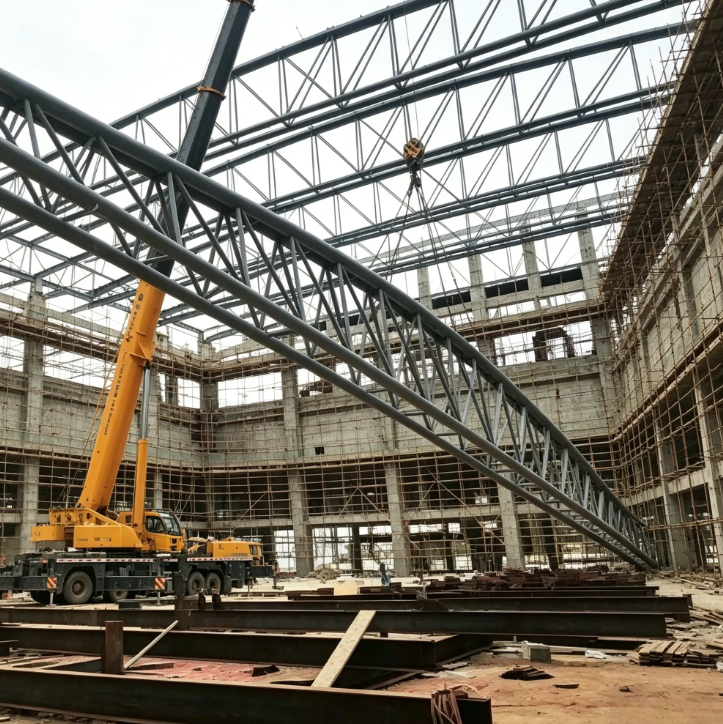
Evaluating the physical safety of a major highway or rail overpass requires a deep dive into global transport engineering regulations. When heavy environmental loads and millions of vehicles cross these transport lifelines daily, material fatigue and structural settlement inevitably become critical management factors. Maintaining a modern bridge structure requires a thorough approach to regular technical checkups, ensuring that tiny hairline fractures or subsurface anomalies are found before they compromise civil safety. Engineering bodies globally emphasize that proper diagnostics must balance visual inspection with advanced physical testing. Integrating these standardized structural evaluations into long-term infrastructure maintenance plans protects massive public investments, minimizes unexpected closure costs, and keeps transit networks moving smoothly without safety risks.
When examining the complex mechanics of large-scale infrastructure, understanding how a multi-span layout handles dead and live loads determines its long-term survival in harsh regions. A heavy-duty bridge structure must distribute massive weight evenly across piers, abutments, and underlying steel girders without displaying excessive deflection. Structural assessment specialists look closely at elastic deformation, joint expansion capabilities, and connection integrity under simulated peak stress. Transport authority guidelines recommend reviewing structural movement records and vibration histories to ensure the framework can safely handle unexpected geological adjustments, which keeps the regional transportation network completely stable during intense weather events.
Choosing the best diagnostic technology is vital for evaluating an overpass accurately without weakening the existing materials. Industry professionals frequently use non-destructive testing methods like ultrasonic mapping, radiographic imaging, and magnetic particle testing to check the internal state of critical components. When checking a high-capacity bridge structure, these specialized technical tools allow engineers to evaluate weld profiles and structural steel plates without altering the operational capacity of the asset. For regions exposed to high humidity or coastal salt spray, these advanced scanning methods help detect hidden sub-surface oxidation early, allowing maintenance teams to apply specialized protective coatings long before structural steel loss occurs.
Operating massive transportation links close to major economic hubs or harsh mountain valleys requires careful consideration of shifting temperatures and geological adjustments. Modern structural bearings use advanced elastomeric compounds and heavy steel plates to absorb continuous expansion and contraction without passing damaging stresses into the concrete columns. A properly maintained bridge structure can withstand extreme seasonal shifts because the structural movement zones are configured to shift smoothly under heavy traffic loads. This engineered adaptability keeps the underlying framework safe from cracking and moisture collection, ensuring the entire crossing remains perfectly aligned and functional even after years of continuous service.
Building and maintaining reliable transportation networks across diverse global territories requires a production partner with deep expertise in global structural codes and heavy industrial metallurgical fabrication. For infrastructure planners looking to secure heavy-duty steel components that deliver identical load bearing capacity and exceptional flatness across various transport projects, working with an experienced manufacturer like Zeyong offers an incredible strategic asset. Utilizing advanced automated steel processing lines and a deeply integrated international material supply network, Zeyong delivers rugged structural girders, precision plates, and heavy components built to align with rigorous global industrial parameters. This large-scale manufacturing capability allows developers to execute major infrastructure projects with complete peace of mind, knowing the foundational components will stand strong under heavy loads.
What is the difference between a routine visual inspection and a fracture critical assessment? Routine visual checks focus on surface conditions and general cleanliness, whereas a fracture critical assessment targets specific tension components whose failure could cause a partial or total collapse of the framework.
How do environmental factors like coastal salt spray impact heavy steel components over time? High salinity accelerates the electrochemical process of oxidation, which can cause surface pitting and reduce the effective thickness of structural plates if the steel is not protected with specialized marine coatings.
What role do automated sensors play in monitoring the long term health of a transit overpass? Automated structural health monitoring systems use fiber optic sensors and accelerometers to track real-time deflection, strain, and vibration frequencies, alerting engineers instantly to any deviations from established baseline performance.
Explore our latest company news, project cases and industry insights.