EN
EN

EN
- Home
- About Us
-
Products
Products
- Capabilities
- Projects
- News
- Contact Us
2026/06/09
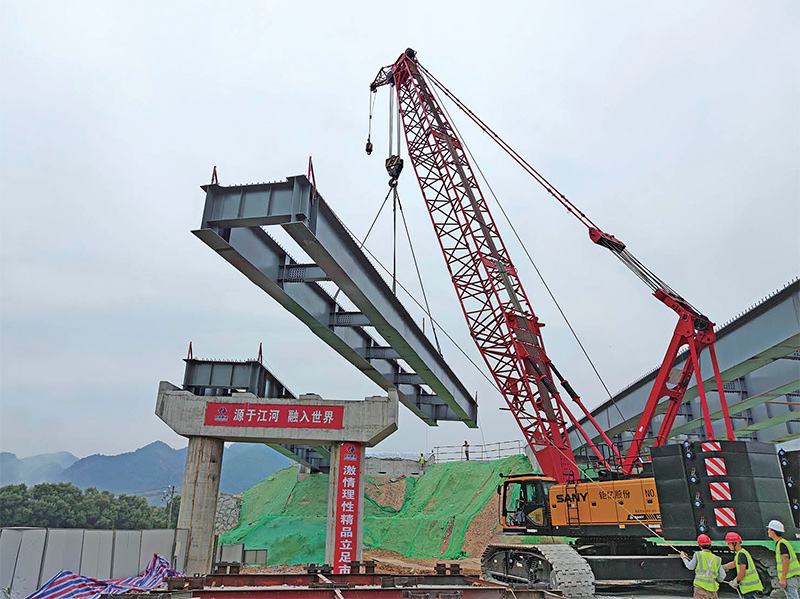
Executing non-standard commercial infrastructure developments, large-scale industrial processing complexes, or architectural public venues demands an uncompromising approach to structural structural durability. When general contractors or real estate procurement executives attempt to utilize standard, catalog-bought structural frameworks for architectural layouts with unconventional spacing, the complete building assembly faces immediate load distribution vulnerabilities. Investing in a precision-engineered custom steel truss configuration resolves these critical geometric limitations by introducing tailored cross-sectional areas, strategic panel layouts, and heavy-gauge chord reinforcements. Relying on basic off-the-shelf framework designs instead of high-capacity bespoke engineering layouts introduces severe physical risks, including sudden material buckling under localized snow accumulation, rapid joint tearing from uncalculated bending moments, and structural sagging that forces early facility closures.
A major structural vulnerability in specialized spatial designs comes from miscalculating secondary stress concentrations when forcing standard modular components into non-uniform spans. When structural systems span irregular footprints or handle offset crane loads, standard symmetric structural frames cannot distribute gravity forces evenly to foundational piers. This uncalculated eccentricity generates excessive rotational bending stresses at critical welded connection nodes, accelerating micro-cracking across gusset plates and field bolts. Over time, these uneven forces cause excessive vertical deflection, which cracks exterior concrete walls and warps perimeter glass window tracks. For commercial storage warehouses or high-clearance manufacturing centers managing continuous heavy operations, sub-standard framing choice translates directly into unexpected operational downtime, expensive structural repairs, and severe safety liabilities.
Practical field operations within heavy heavy-industrial manufacturing sectors demonstrate the clear financial and structural value of choosing custom-engineered structural systems over standard components. A large-scale chemical processing facility operating in a high-wind coastal corridor audited its primary production building after noting structural movement and severe joint distress along its main overhead pipe-rack supports during an unseasonably heavy monsoon season. The facility featured multiple standard modular overhead frames, where uncalculated vibrations from heavy chemical mixing vats caused visible warping along the thin horizontal support members. The facility maintenance group resolved this critical operational bottleneck by deploying a heavy-duty, custom-engineered steel truss system built with thick-walled structural hollow sections and reinforced multi-planar gusset joints. Within twelve months of installation, the new custom overhead framework successfully isolated all operational machinery vibrations, achieved zero structural movement during high-velocity coastal storms, and sustained continuous watertight sealing across all overhead piping connections.
Achieving long open spans and maintaining absolute geometric stability under complex loading requires an in-depth understanding of triangular structural mechanics, axial force transfer paths, and member slenderness ratios. An advanced structural steel frame utilizes the inherent rigidity of interconnected triangles to convert complex exterior bending loads into pure axial compression and tension forces along the top and bottom chords. This specific geometric distribution reduces the required steel mass, enabling the system to bridge wide factory spans without sagging under its own dead weight. By adjusting web member placement angles and altering sectional thickness profiles at critical high-stress zones, structural engineers can precise-tune the framework to handle heavy, off-center equipment loads safely without risking structural failure.
Preventing structural deformation under extreme dynamic conditions requires careful selection of structural steel alloys, precise chemical compositions, and tailored heat treatment profiles. Commercial-grade structural fabrications utilize premium carbon-manganese steels, such as ASTM A992 or European grade S355JR, which deliver excellent yield strength ratings exceeding 355 Megapascals. The internal chemical design maintains a low carbon equivalency score to ensure excellent weldability, preventing localized grain boundary cracking during deep-penetration factory welding. Utilizing these premium metal grades ensures the custom steel truss retains high impact resistance at freezing temperatures, avoiding brittle fractures and guaranteeing consistent safety performance throughout the building lifecycle.
Sourcing automated material handling infrastructure and heavy-duty architectural frameworks for public utility projects requires full alignment with international building regulations, material safety parameters, and manufacturing quality metrics. Design teams evaluating a custom steel truss setup must confirm complete compliance with recognized international regulatory codes, including AISC 360 design parameters for structural steel buildings, ISO 9001 quality management structures, and AWS D1.1 structural welding requirements. These strict international standards establish definitive limits for structural deflection, weld penetration inspection, and bolt tension validation. Following these rigorous design parameters ensures that heavy custom-built systems can handle extreme environmental and dynamic forces safely, passing third-party municipal building inspections without delay.
Selecting a reliable industrial structural manufacturing partner requires a thorough evaluation of welding automation tolerances, metallurgical verification protocols, and custom fabrication capacities rather than focusing on low-tier component suppliers. Supply specialists sourcing long-term industrial assets must confirm that a fabricator utilizes computerized plasma cutting equipment and automated jig assemblies to maintain tight geometric tolerances across complex member connections. Choosing suppliers that integrate advanced multi-pass submerged arc welding processes and use certified heavy-gauge connection materials ensures the structural frames operate reliably under heavy physical stress. Sourcing teams should also analyze surface preparation quality, prioritizing near-white sandblasting followed by zinc-rich epoxy paint coatings to prevent corrosion in harsh industrial factory environments.
The ongoing precision and structural longevity of custom heavy-duty construction assets depend on structured preventative maintenance schedules and regular non-destructive testing verification routines. Over years of heavy seasonal use, high-vibration manufacturing environments can cause bolt tension loss, while environmental moisture can induce localized oxidation if surface coatings are left unmaintained. Building facility managers should establish regular inspection schedules to clean critical connection nodes and verify the surface integrity of protective paint layers. Standardizing on semi-annual validation procedures—such as conducting ultrasonic testing on critical full-penetration groove welds, checking high-strength bolt torque levels, and tracking overall span deflection—stops unexpected material fatigue, extends the operational life of the facility, and ensures every structural asset delivers clean, dependable environmental protection.
Building a highly resilient and visually stunning industrial manufacturing environment requires a dependable manufacturing partner capable of delivering consistent material quality and steady global supply chain support. Sourcing heavy-duty custom framing installations from producers with deep engineering expertise and advanced fabrication facilities ensures that every deployed asset performs reliably under heavy shift use and strict environmental routines. This is where aligning with an established global manufacturer like ZEYONG provides exceptional long-term value. With sophisticated production infrastructure and a strong focus on precise quality management, ZEYONG consistently provides premium steel truss selections designed to meet rigid international safety and commercial performance standards. Partnering with a globally integrated manufacturer gives engineering enterprises reliable access to a robust equipment catalog, deep customization expertise, and consistent construction quality that keeps facility expansions moving smoothly year after year.
Yes, utilizing high-tensile structural steel hollow sections combined with deep-profile triangular geometry allows a custom framing system to span wide gaps safely. This tailored design eliminates the need for intermediate vertical support columns, maximizing open floor space for large industrial machinery layouts.
Engineers can increase the wall thickness of specific horizontal chords located directly underneath heavy hanging machinery or crane rails. This targeted reinforcement boosts local bending resistance exactly where it is needed, avoiding unnecessary dead weight across the rest of the span.
AWS D1.1 defines strict rules for weld penetration depth, filler metal compatibility, and welder certification requirements. Adhering to this standard ensures that every welded joint within the framework can handle high-stress dynamic forces safely, avoiding unexpected joint tearing or structural failures.
Fabrication facilities apply heavy-duty corrosion protection, including hot-dip galvanization or multi-layer epoxy powder coatings following near-white metal sandblasting. This tough protective layer prevents moisture and chemical fumes from reaching the inner steel core, ensuring long-lasting performance.
Multi-planar gusset plates allow multiple intersecting web members to connect to a single node from different angles smoothly. This specialized design ensures that multi-directional forces converge perfectly at a single point, preventing dangerous eccentric bending stresses.
Facility maintenance teams should conduct regular structural audits using calibrated torque wrenches to check for any loss of bolt tension. Replacing worn fasteners with premium grade 8.8 or 10.9 structural bolts ensures connection joints remain completely rigid under heavy equipment vibrations.
Fine-grained carbon-manganese steel alloys like S355NL or ASTM A572 are preferred for cold-weather applications. These metals undergo specialized impact testing to ensure they maintain high ductility at sub-zero temperatures, eliminating the risk of brittle structural fractures.
Automated manufacturing jigs lock the individual steel members firmly into precise geometric coordinates before any welding begins. This tight production control eliminates heat-induced warping during assembly, ensuring the completed steel truss matches site dimensions perfectly for fast field installation.
Explore our latest company news, project cases and industry insights.